
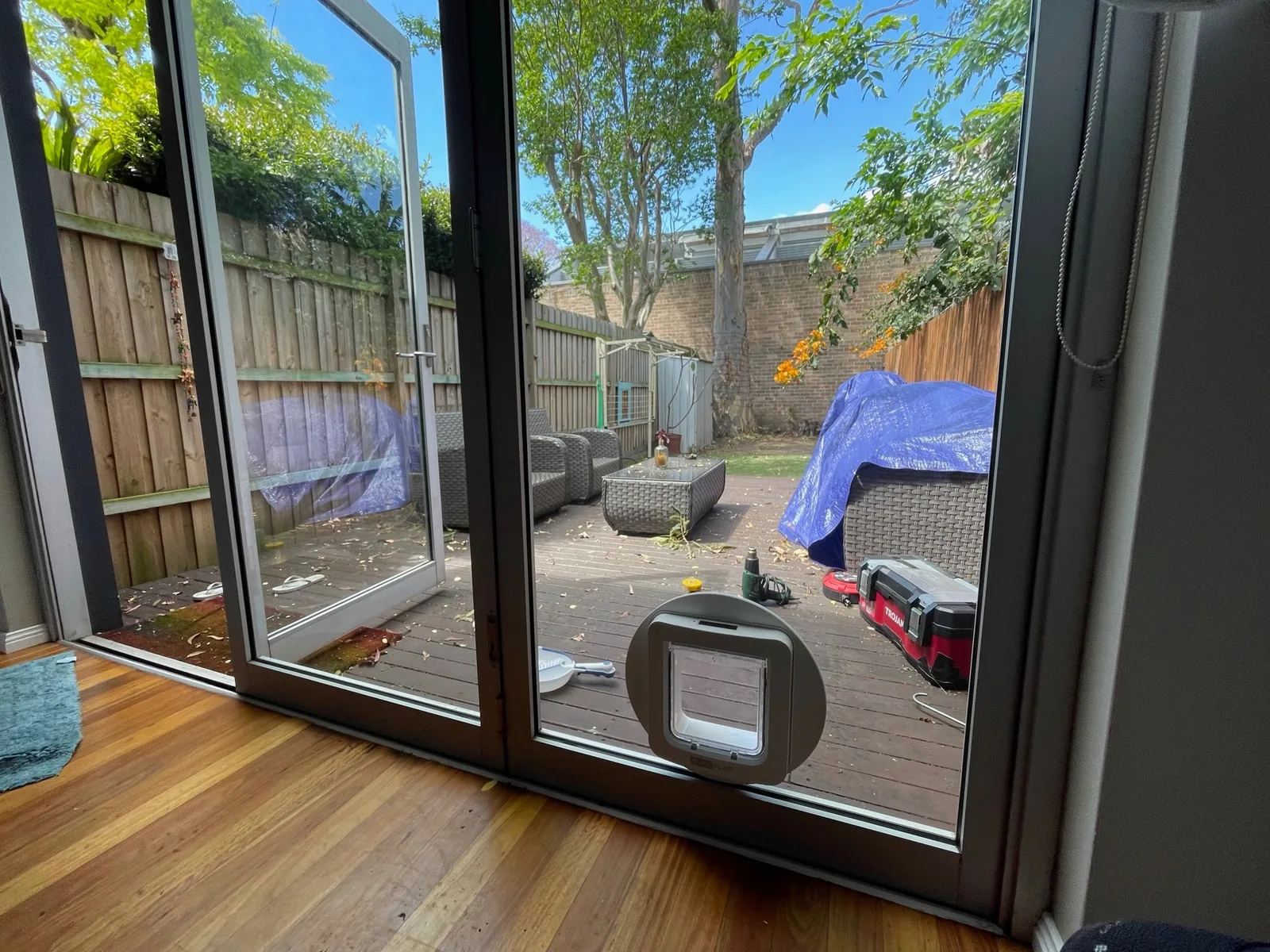
A microchip pet door reads the microchip your cat or dog already has and unlocks only for them. Every other animal, from the neighbour’s cat to a possum, finds it locked.
Here is how they work, what to do if your pet is not chipped, and what to ask before you choose one. We fit them for cats and for dogs.
How a microchip pet door works
The door has a scanner on the outside. When your pet walks up to it, the scanner reads their microchip. If it recognises the chip, the door unlocks and lets them in. If it does not, it stays locked.
Registering a pet is done at the door at the touch of a button, and the chip is then kept in its memory. Many models let your pet out freely and only check pets coming in, which is called selective entry.
What if my cat does not have a microchip?
You can use an RFID collar tag instead. It is a small, light tag on your cat’s collar that the door reads the same way it reads a chip. Our microchip cat door comes with one tag, and more are sold separately.
Will it work with my cat’s microchip?
The doors we fit work with most identification microchips, so in almost every case your cat’s existing chip will work without anything new being implanted or bought.
Can several cats use one door?
Yes. The door we fit stores up to 32 pets. Some models also let you set access for each pet, for example letting one cat out while keeping a new kitten or an indoor cat inside. One of our customers had five cats, each with its own settings, and it ended their midnight escapes.
Keeping your cat in at night
Curfew mode locks and unlocks the door at set times each day, so you can keep your cat inside from dusk to morning without remembering to lock it. There is also a manual lock, including an in-only setting that lets your cat come home but not go back out.
What happens when the batteries run low?
The door runs on batteries that last up to 12 months. A low battery light flashes well before they run out, and the door remembers every registered pet even with the batteries removed, so you never have to set it up again.
Are microchip cat doors secure?
That is the main reason people choose one. Because the door opens only for registered pets, it keeps out stray cats, possums and other uninvited visitors. The flap closes snugly and the door locks.
Microchip doors for dogs
Microchip doors are not only for cats. We also supply and fit microchip dog doors, which work the same way: the door opens for your registered dog and stays locked to everything else. As with any dog door, the size has to suit your dog, so tell us your dog’s size and we recommend one that suits. See microchip dog doors.
Where can a microchip pet door go?
We fit them into glass sliding doors, timber doors, windows and walls. Our microchip cat door is larger than a standard cat flap, so it also suits large cats and some small dogs.
See microchip cat doors or microchip dog doors for what we fit and what is included, or call 0421 575 229 or get a quote online.